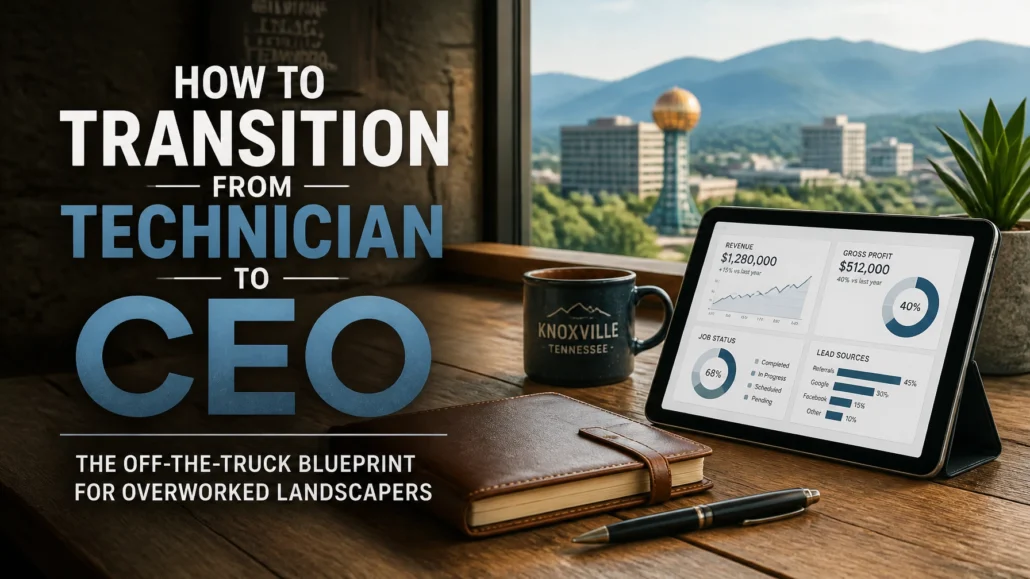
You know the feeling. It’s 6:00 PM on a Tuesday in July. Your back is screaming, your boots are caked in East Tennessee red clay, and your phone hasn't stopped vibrating with "quick questions" from your crew since 7:00 AM.
You started this landscaping business because you love the work. You’re good at it. You take pride in a perfectly striped lawn and a retaining wall that looks like a work of art. But lately, the business is running YOU. You’re stuck in the "technician trap": working IN your business rather than working ON it.
If you don’t find a way to get off the truck, your body is going to give out before your bank account catches up. I’ve seen it a hundred times. Relentless entrepreneurs like you pushing until they break.
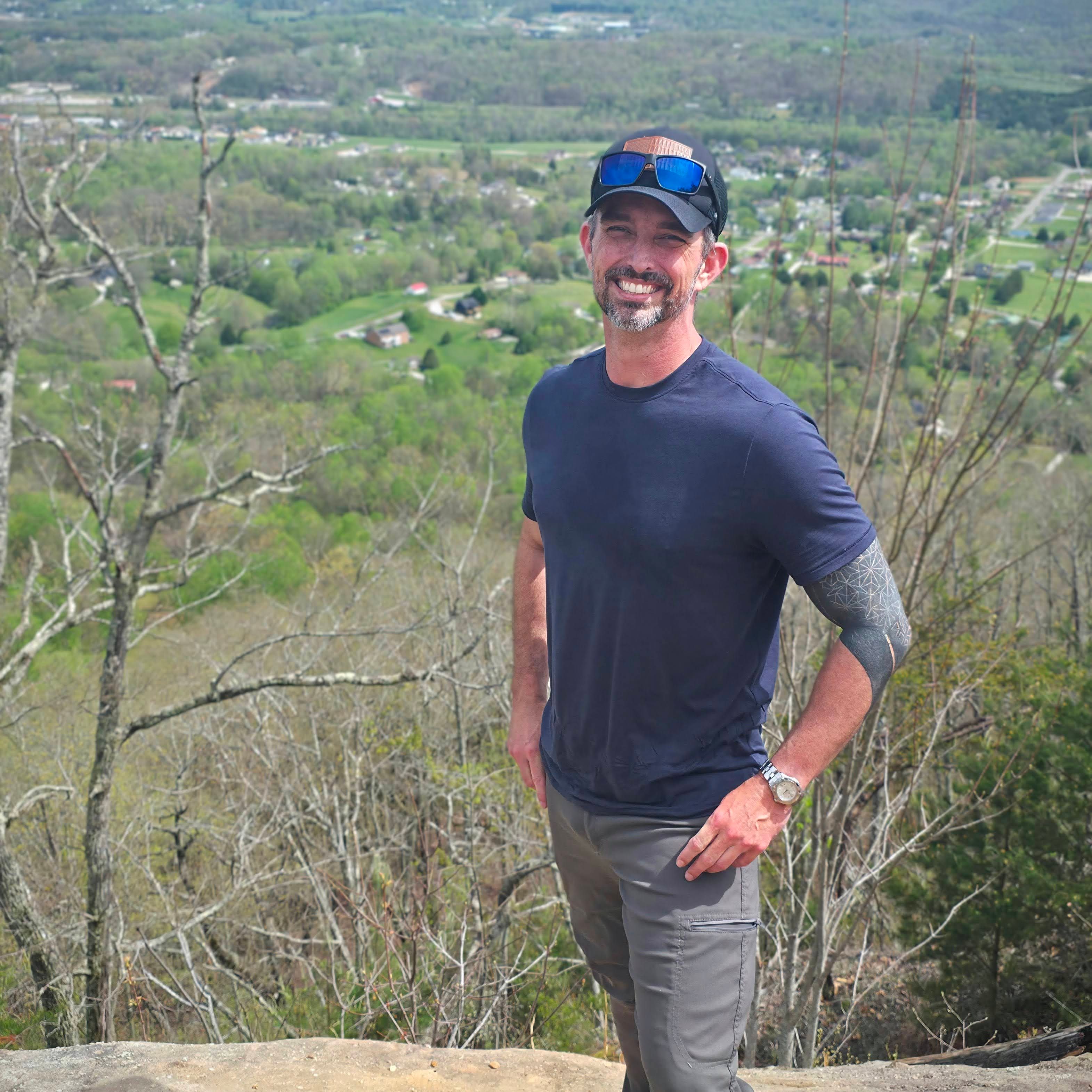
I’m here to tell you there’s a better way. You can build a company that thrives without you holding the trimmer. As a best-selling author who co-wrote a book with Chris Voss on the power of empathy and negotiation, I’ve spent my career helping leaders realize that the biggest obstacle to their growth is usually the person in the mirror.
In my coaching, I focus on a synergistic approach involving your business, your brand, and your body. Today, I’m giving you the blueprint to shift from the guy doing the work to the CEO who leads the team doing the work.
The Physical Toll: Why You Can't Stay on the Truck Forever
Let’s be real: landscaping is a young man’s game. The physical wear and tear of manual labor is a debt that eventually comes due. If your entire business model relies on your physical stamina, you don't have a business; you have a high-stress job with no benefits.
When you’re exhausted, your leadership suffers. Your "Body" needs to be the engine that drives your "Business." If you're "sweating it out" in the field ten hours a day, you don't have the mental clarity to make high-level strategic decisions. You’re just surviving.
To truly grow a landscaping business, you HAVE to step back. You need to trade the shovel for a system.

Step 1: Document Your "Brain" with SOPs
The first step to getting off the truck is getting the decisions out of your head and onto paper. Every time you have to explain how to fuel the mowers or how to handle a specific customer complaint, you are wasting CEO time.
Standard Operating Procedures (SOPs) are the secret sauce of every scalable business. They ensure that your quality stays high even when you aren't there to oversee the job.
Start with these three categories:
- Production Standards: How do we mow? What is the trimming order? What does "done" look like?
- Customer Communication: How do we answer the phone? How do we handle weather delays?
- Maintenance: When do blades get sharpened? Who is responsible for truck oil changes?
I’ve put together a 3-step SOP checklist that helps you nail these down fast. It’s part of my broader framework for operational excellence. You can grab it as part of the download package I’ve prepared for this article.
Step 2: Build a Training System (The 80% Rule)
Most landscapers tell me, "I can't find good help." What they usually mean is, "I haven't built a system to turn an average worker into a great one."
You need to stop looking for a "mini-you" and start building a team that follows your playbook. Use the 80% Rule: If an employee can do a task 80% as well as you can, let them do it. Your job is to coach them through the final 20% over time, not to take the tool back because they aren't perfect on day one.
The 4 Stages of Delegation:
- Stage 1: You do it, they watch.
- Stage 2: You do it together.
- Stage 3: They do it, you watch.
- Stage 4: They do it alone, and you check the results.
This is how you replicate yourself. This is how you stop being the bottleneck in your own company.

Step 3: Track Everything with a CRM
If you’re still using a paper calendar or a messy inbox to manage your leads, you’re leaving money on the table. To get landscaping clients and keep them, you need data.
A Customer Relationship Management (CRM) system is your central nervous system. It tells you:
- Who your most profitable clients are.
- Which neighborhoods have the highest density (less windshield time!).
- When a lead has gone cold so you can "kick into gear" and follow up.
One of the biggest shifts I help my clients make is transitioning their "back-of-the-envelope" math into a CRM-driven workflow. To help you with this, I’ve included a CRM Transition Worksheet in the download for this post. It will help you audit your current process and see where the gaps are.
Scaling Your Brand and Local Presence
Once you have the systems in place, you need to turn up the volume. In Knoxville and across East Tennessee, your reputation is everything. You aren't just selling "mowing"; you’re selling a professional experience.
I always tell my clients to stop worrying about the latest social media trends and focus on their GMB (Google Business Profile). For a local landscaping business, your GMB is your digital storefront. It’s where your reviews live and where local homeowners find you when they’re ready to buy.
Make sure your brand narrative is consistent. Are you the "cheap guy" or the "pro guy"? Trust me, you want to be the pro guy. The pro guy gets off the truck; the cheap guy stays on it until his knees give out.
The Market Dominance Blueprint (MDB)
All of this: the systems, the delegation, the data: is part of what I call The Market Dominance Blueprint (MDB). It’s the framework I use to help relentless entrepreneurs stop playing small and start dominating their market.
Scaling isn't just about adding more crews; it’s about ensuring you have the physical stamina and mental clarity to lead them. Are you eating right? Are you training your body as hard as you’re training your team? In my coaching, I don't just look at your P&L; I look at your lifestyle. Because if you’re healthy, your business has a much better chance of being healthy too.
Your Call to Action: Take the First Step
You don't have to stay stuck on the truck. The transition from technician to CEO is a choice. It’s a choice to stop "doing" and start "leading."
I want to help you make that shift. Start by downloading the 3-step SOP checklist and the CRM transition worksheet I’ve mentioned throughout this post. You can find them right here on my free resources page.
These aren't just pieces of paper; they are the first bricks in the foundation of your new, scalable business.
Reflection Questions for You:
- Which task are you doing today that you could delegate using the 80% Rule?
- If you were injured tomorrow and couldn't work for a month, would your business survive?
- What is one "CEO task" (like reviewing your GMB or training a crew leader) that you’ve been putting off because you’re too busy in the field?
It's time to work ON the business. Let's get to work.
More Insights: