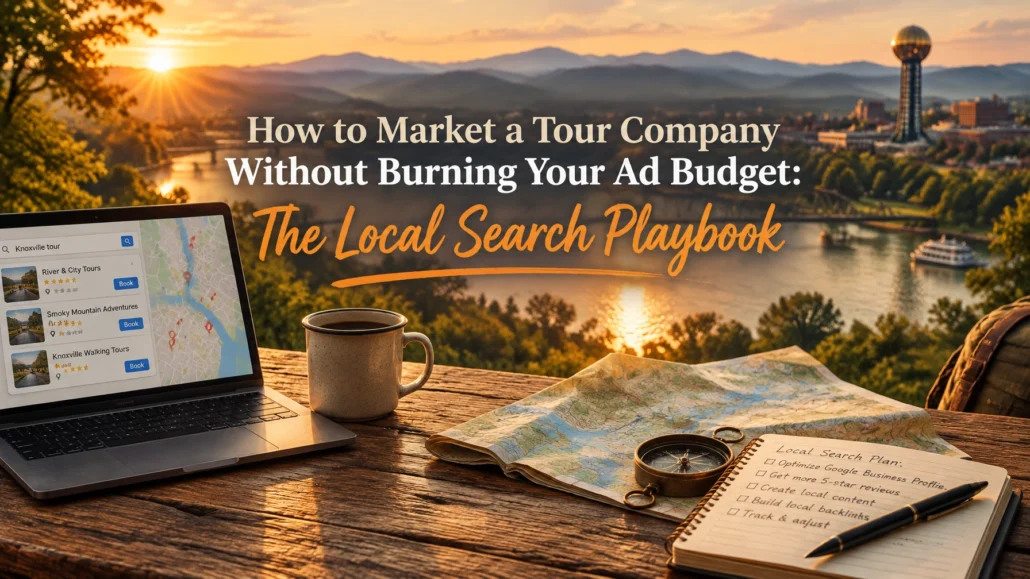
Running a tour company means you already have enough moving parts.
Weather changes. Guides call out. Equipment needs attention. Guests ask the same questions in twelve different ways. Then, somewhere between checking the forecast and confirming tomorrow’s launch time, you’re expected to become a full-time marketer.
That’s where many adventure operators reach for ads.
Paid ads can help, but they can also become an expensive crutch. If your Google Business Profile is incomplete, your reviews are stale, and your booking process feels like a scavenger hunt, more ad spend simply sends more people into a leaky marketing system.
So, how do you market a tour company without burning your budget?
You build visibility where travelers are already looking, make trust easy to see, and create simple loops that turn one great guest experience into the next booking.
Here’s the local search playbook I would use for a tour company, charter boat business, outdoor recreation business, or adventure operator serving Knoxville and beyond.
Start With the Searcher, Not the Algorithm
Before you touch your listing or write another blog post, get clear on the customer you want to attract.
Are you trying to reach:
- Families looking for an easy half-day experience?
- Couples searching for a scenic sunset cruise?
- Visitors staying near downtown Knoxville?
- Corporate groups planning an outdoor activity?
- Experienced travelers looking for a more technical adventure?
Those people may all enjoy the outdoors, but they do not search the same way.
A family may search for “things to do in Knoxville with kids.” A visitor may search for “guided kayak tour near Knoxville.” Someone ready to book a charter may search for “private boat tour Tennessee River.”
Your job is to connect your experience to the language your ideal guest actually uses.
Write down:
- Your three most profitable tours or experiences.
- The locations where guests meet you or where the experience takes place.
- The guest type each tour fits best.
- The biggest questions or concerns people have before booking.
- What makes your experience different from the other options nearby.
That list becomes the foundation for your local search strategy. No smoke and mirrors. No keyword stuffing. Just a clearer connection between what people want and what you offer.
Turn Your Google Business Profile Into a Booking Assistant
Your Google Business Profile is often the first impression a traveler gets of your company.
They may find you while searching Google Maps. They may compare you with three competitors while sitting in a hotel room. They may never visit your homepage before deciding whether to click, call, or book.
That means your profile should answer the important questions quickly:
- What kind of tour do you offer?
- Where do you operate?
- How long does it take?
- Who is it best for?
- Where does the guest meet you?
- Is booking available?
- What do recent guests say?
Do not treat the profile like a digital business card. Treat it like a front-desk employee who works around the clock.
Tighten the essentials
Make sure your business name, phone number, website, hours, service area, and booking link are accurate. If your meeting location changes by tour, explain that clearly instead of creating confusion with multiple addresses.
Choose the most accurate primary category available. Then add secondary categories only when they genuinely represent your services. A charter boat operator, walking tour company, and whitewater outfitter may all serve tourists, but they should not describe themselves the same way.
Your business description should naturally include:
- Your main experience
- Your service area
- Who the tour is for
- Your strongest differentiator
- A clear next step
For example:
Guided river and outdoor experiences in Knoxville and East Tennessee, including private boat tours, scenic excursions, and small-group adventures for visitors, families, and local groups.
That is much stronger than “We offer fun tours for everyone.”
Show the experience before people arrive
Upload photos that answer the questions guests are already asking.
Show the launch point. Show the boat, trail, gear, parking area, meeting location, and scenery. Include different seasons if your experience changes throughout the year.
A polished hero shot is useful, but practical images often do more work. Travelers want to know what they are getting into. They want to picture themselves arriving, checking in, and enjoying the experience without feeling lost.
Add short videos when possible. A quick look at the route, vessel, equipment, or landscape can reduce uncertainty before someone ever contacts you.

Build Tour Pages Around Real Booking Intent
Your website should not force every visitor through the same generic “Things To Do” page.
Create a dedicated page for each major experience. If you serve more than one meaningful location, create useful location-specific pages as well.
A strong tour page should make the next step obvious. Include:
- A clear title that names the experience and location
- A straightforward description of what happens
- Tour length and starting times
- Difficulty level or physical requirements
- Age guidelines
- What guests should bring
- Weather and cancellation information
- Meeting point and parking instructions
- Safety details
- Recent testimonials
- A visible booking button
Think about the questions a hotel guest would ask a front-desk employee. Your page should answer those questions before the guest has to pick up the phone.
This is especially important for adventure tourism marketing because the experience itself may be unfamiliar. A visitor might love the idea of a guided paddle, scenic hike, or river excursion but hesitate because they do not know what to expect.
Clarity turns curiosity into confidence.
You can also publish helpful local content around the experience:
- What to do in Knoxville on a sunny Saturday
- How to choose an East Tennessee river tour
- What to bring on a guided outdoor excursion
- Best times of year for a scenic boat tour
- Family-friendly outdoor activities near Knoxville
Do not write these articles just to fill a blog. Write them because they help a real traveler make a decision.
Create a Review System, Not a Review Wish
Most operators agree that reviews matter. Fewer have a reliable process for earning them.
That’s the difference.
Do not wait for guests to remember to leave a review weeks after their tour. Ask while the experience is still fresh.
A simple review system looks like this:
- Confirm the guest had a good experience before the tour ends.
- Send a short follow-up message within a day or two.
- Link directly to your Google review page.
- Ask for an honest review rather than demanding a five-star rating.
- Respond to every review with a specific, human reply.
- Track which tours and locations guests mention most often.
Avoid writing reviews for customers or offering incentives in ways that violate platform policies. You want real feedback from real guests.
You can make the request more useful by reminding guests what details help future visitors:
If you have a minute, tell people which tour you took, what you enjoyed, and anything a first-time guest should know.
That often produces more helpful feedback than a vague “Please review us.”
When guests mention “sunset cruise,” “Tennessee River,” “Knoxville,” or “family-friendly,” those details help future searchers understand your offer. They also give you language to use on your website and profile.
Reviews are not just reputation management. They are customer research handed to you for free.
Build Hotel and Local Partnerships That Actually Produce Bookings
A hotel partnership should not be a stack of brochures sitting behind a desk.
It should be easy for the hotel staff to understand, recommend, and track.
Start with ten nearby properties instead of trying to contact everyone in town. Look for hotels, campgrounds, inns, hostels, and vacation rental managers whose guests match your ideal customer.
Create a simple partner sheet that includes:
- The best tour for their guests
- Duration and difficulty
- Price range
- Departure times
- Pickup information
- Age requirements
- Weather policy
- How to book
- Who to contact with a last-minute question
Then give each partner a trackable booking link or code. You need to know which relationships are creating business. Otherwise, you are guessing.
Make the arrangement worthwhile for both sides. That might mean a referral commission, a bundled guest package, a special booking window, or an easy perk for the hotel’s guests.
And do not overlook the value of a short familiarization visit. If a hotel manager or concierge understands the experience personally, they can recommend it with confidence instead of reading from a brochure.
Partnerships can also strengthen your online presence. Ask appropriate partners to list your company on their local activity pages and link to the specific tour page that fits their audience.

Turn One Booking Into Three More Opportunities
The first booking is not the end of the marketing process.
It is the beginning of a relationship.
After a guest books, look for natural next steps:
- Recommend another experience that fits their trip.
- Invite them to book again during a different season.
- Encourage them to refer friends visiting Knoxville.
- Ask whether they are planning a future group, celebration, or corporate outing.
- Send occasional updates that are genuinely useful.
Keep it simple. You do not need to flood inboxes with promotions. A seasonal river update, a new route announcement, or a reminder about fall availability can be enough to stay relevant.
You can also create referral language your guests can easily repeat:
Know someone visiting Knoxville who would enjoy this? Send them our booking link.
That may sound basic, but basic works when you actually use it.
The goal is to build a loop:
Great experience → review → local visibility → new booking → referral → repeat guest.
That loop compounds over time. Paid ads can create a spike. A strong reputation and local presence can create momentum.
Use Ads Only After the Foundation Works
I am not anti-advertising. I am anti-paying to hide a broken system.
Once your profile is accurate, your pages convert, your reviews are current, and your partnerships are producing referrals, you can test a small ad budget with more confidence.
Keep the test focused:
- Promote your strongest tour, not every service.
- Target people searching for specific experiences.
- Use location and travel intent carefully.
- Send clicks to a dedicated tour page.
- Track calls, bookings, and revenue.
- Stop campaigns that create activity but not profitable bookings.
If your ads are generating clicks but no bookings, do not automatically increase the budget. First ask whether the page is clear, whether the offer fits the search, and whether the booking process feels easy.
More traffic is not the goal.
More qualified bookings are.
The Local Search Playbook in One Sentence
If you want to know how to market a tour company without burning your ad budget, start here:
Be easy to find, easy to trust, easy to book, and easy to recommend.
That is the heart of adventure tourism marketing.
Your Google Business Profile gets you discovered. Your tour pages answer the hard questions. Your reviews prove the experience is real. Your hotel and local partnerships put you in front of visitors at the right moment. Your follow-up keeps the relationship alive after the first trip.
And if you need help building the system, I can help.
Through my marketing systems work, I help business owners create clearer positioning, stronger local visibility, consistent content, and a marketing process that does not depend on random bursts of effort.
You run the tours. You take care of the guests. You deliver the experience.
I’ll help you build the visibility and follow-through that keeps the bookings coming.
Book a strategy call with me and let’s figure out where your local search engine is leaking opportunities.