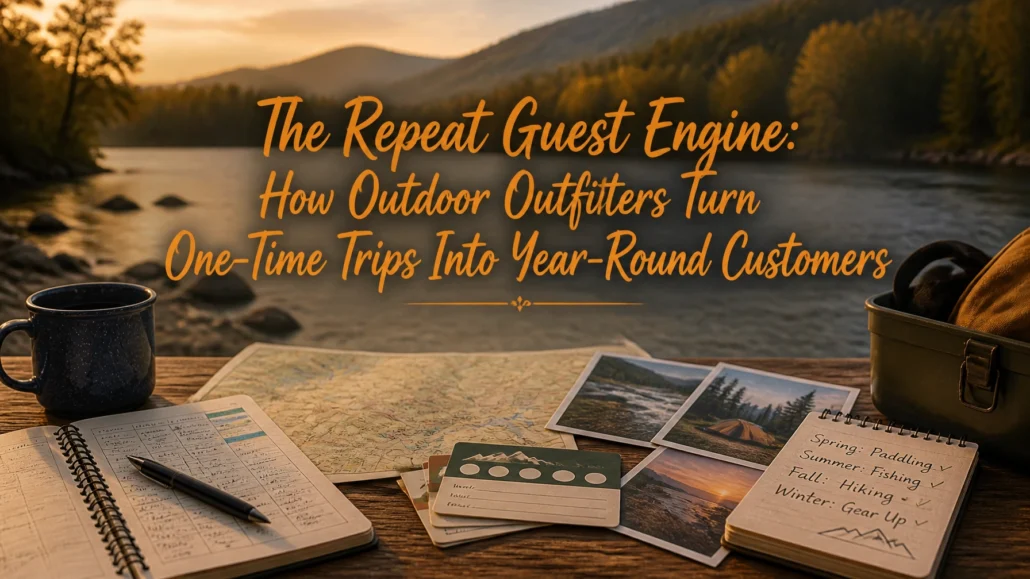
Most outdoor outfitters are excellent at creating unforgettable experiences.
The guest arrives nervous. They leave smiling, tired, and already telling friends about the river, trail, lake, or mountain they just explored.
Then the relationship goes quiet.
No follow-up. No seasonal ideas. No invitation to return. Maybe an automated review request gets sent, but that’s where the customer journey ends.
That is a costly mistake.
If you run an outdoor recreation business, your first booking should not be the finish line. It should be the beginning of a customer lifecycle that turns one-time visitors into repeat guests, referral sources, and long-term advocates.
You do not need a complicated loyalty app or a massive marketing budget. You need a clear system that keeps the experience alive after the trip is over.
Start With the 48-Hour Follow-Up Window
The first two days after a trip are valuable because the memory is still fresh.
Your guest may still be talking about the biggest rapid, the best view, the fish that got away, or the moment they finally stepped outside their comfort zone. That emotional connection gives you an opportunity to continue the relationship.
Do not lead with a hard sell.
Lead with appreciation.
A simple first message should:
- Thank the guest for joining you.
- Reference something specific from the trip.
- Share photos, trip details, or a helpful resource.
- Invite honest feedback.
- Ask for a review if the experience earned one.
- Let them know you will share future trip ideas and seasonal openings.
A generic “Thanks for booking with us” message gets treated like background noise.
A message that says, “It was great watching your family tackle the lower section of the river together,” feels personal because it is personal.
That distinction matters.
Research and industry guidance from ALPN’s repeat-customer framework and FareHarbor’s customer-retention recommendations both point toward the same principle: thoughtful communication after the experience creates more opportunities for future bookings.
Build a Simple Post-Trip Sequence
You do not need to write every email manually. Set up the sequence once, then personalize the pieces that matter.
Here is a practical starting point:
Same day: Set expectations
At the end of the trip, tell guests what happens next.
You might say:
“We’ll send you a thank-you email tomorrow with your photo link and a few ideas for your next adventure.”
That small statement makes the follow-up feel expected instead of promotional.
24 hours: Send the memory-and-review message
Thank them while the experience is still fresh. Include a direct review link for your Google Business Profile, especially if the guest gave you positive feedback in person.
Make the review request easy. One link. One clear ask.
48–72 hours: Ask for feedback
Give guests a simple way to tell you what worked and what did not.
A short survey can include:
- How would you rate the overall experience?
- What was your favorite part?
- Was anything confusing or disappointing?
- Would you recommend the trip to a friend?
- What type of adventure interests you next?
This is not just a marketing exercise. It is operational intelligence.
A guest who had a problem but gives you a chance to fix it is far more valuable than a guest who silently leaves frustrated.
7 days: Share useful content
Send something that helps guests relive or build on the experience.
Examples include:
- A packing checklist for the next season
- A guide to nearby trails or waterways
- Gear recommendations
- A trip photo gallery
- A behind-the-scenes story about the route
- A short guide to preparing for a more advanced trip
This is where your adventure tourism marketing becomes more than promotion. You are helping people imagine their next experience.
30 days: Make the next-trip recommendation
Now you can make a direct invitation.
Do not simply promote the same trip with a discount. Recommend the logical next step.
- A beginner rafting guest may be ready for a longer route.
- A half-day fishing client may be interested in a full-day guided trip.
- A summer visitor may enjoy a fall foliage excursion.
- A family that booked once may want a private group experience next year.
The best rebooking message answers one question:
“What would make the next trip meaningfully different from the first?”

Map the Seasonal Customer Journey
Outdoor businesses operate on seasonal demand, but your customers are also seasonal planners.
A guest may think about a summer rafting trip in February, a fall fishing trip in May, or a winter mountain experience before the holidays. If you only contact them when you need to fill tomorrow’s calendar, you are already late.
Create a basic annual journey for each major trip type.
Example: Summer rafting guest
- July: Thank-you email, photos, review request
- August: Beginner-to-intermediate trip recommendation
- October: Fall river and regional adventure content
- January: Early access to next summer’s prime dates
- March: Packing guide and trip-planning reminder
- May: Last call for preferred weekends
Example: Fall fishing guest
- October: Trip recap and feedback request
- November: Gear-care or seasonal fishing content
- January: Next-season planning message
- March: Availability announcement
- May: Referral offer or returning-guest perk
- August: Final preparation content
You are not trying to fill every inbox every week.
You are trying to show up when the guest is most likely to plan.
That is a much smarter use of your time, your list, and your marketing budget.
For more on building consistent visibility and follow-up systems, see my marketing systems service.
Segment Guests Before You Send the Next Message
The more relevant your message, the more likely people are to open it and act on it.
At a minimum, tag guests by:
- Trip type: rafting, fishing, hiking, paddling, zipline, hunting, or lodging
- Experience level: beginner, intermediate, advanced
- Group type: family, couple, corporate group, solo traveler, or local
- Travel distance: local, regional, or destination guest
- Visit season: spring, summer, fall, or winter
- Booking history: first-time, repeat, lapsed, or high-value guest
- Satisfaction: promoter, passive, or detractor
You do not need a perfect database to get started.
Even a few useful tags can dramatically improve your communication.
A local guest may respond to early access for weekend dates. A destination guest may need more planning information and advance notice. A repeat guest may want to know what has changed since their last visit.
Sending all three people the same message is lazy marketing.
Segmenting allows you to sound like you understand the guest instead of treating everyone like a name on a spreadsheet.
Create a Referral Loop, Not a One-Time Referral Ask
Happy guests are natural referral sources, but most outfitters ask for referrals too broadly or at the wrong time.
Start with guests who have already shown strong satisfaction. If someone leaves a glowing review, replies positively to your feedback email, or tells your guide they had a great time, that is your opening.
Make the referral offer simple:
- The past guest receives a credit toward their next trip.
- Their friend receives a first-booking incentive.
- Both benefits are clearly explained.
- The referral link or code is easy to share.
- The reward is trackable.
For example:
“Bring a friend on their first trip with us and you both receive a $50 credit toward a future booking.”
Your exact offer will depend on your margins, trip type, and average booking value. The important thing is that the reward feels concrete and easy to understand.
Do not bury it in a complicated points system.
A referral loop should work like this:
Great experience → personal follow-up → review or referral → new guest → great experience → repeat booking.
That is how customer retention compounds.

Give Returning Guests a Reason to Feel Like Insiders
Discounts are not the only way to encourage repeat visits.
In fact, constant discounting can train guests to wait for a lower price. Instead, create advantages that make returning feel special.
Consider offering:
- Early access to peak-season dates
- A complimentary photo package
- A small gear upgrade
- A preferred launch time
- A returning-guest booking window
- A personal note from the guide
- A free add-on for a milestone booking
- Access to a private seasonal trip announcement
People like feeling recognized.
A returning guest should not feel like they are starting from zero every time they book. Your team should know what they have done before and be ready to suggest what comes next.
This is where strong outdoor business coaching can help. The marketing system matters, but so does the operational discipline behind it. Your booking software, waivers, email platform, review process, and staff notes all need to work together.
Track the Numbers That Actually Matter
Do not measure your customer lifecycle only by email opens.
Track:
- Repeat booking rate
- Average days between bookings
- Direct booking rate among returning guests
- Revenue from repeat customers
- Referral bookings
- Review conversion rate
- Unsubscribe rate
- Revenue by guest segment
- Rebooking rate by trip type
- Lapsed-guest win-back rate
Start with your last 30 or 50 completed bookings.
How many guests received a meaningful follow-up? How many booked again? How many came through a referral? How many gave you a review?
You may discover that your biggest growth opportunity is not more traffic. It may be the customers who already know, like, and trust you.
Your Action Plan for This Week
If your customer follow-up is inconsistent, do not try to build a 12-month machine overnight.
Start here:
- Pull your last 30 completed bookings.
- Add trip type, season, location, and booking history to each guest record.
- Write a 48-hour thank-you and feedback email.
- Write a 30-day “next adventure” email.
- Create one simple referral offer.
- Identify your next seasonal planning window.
- Add a clear Google Business Profile review request.
- Track repeat bookings and referrals monthly.
That is enough to kick your repeat guest engine into gear.
Your guests are not just transactions. They are people who trusted you with their time, money, and experience. When you stay connected after the trip, you give them a reason to return before the memory fades.
And when they return, book direct, and bring someone with them, your business becomes more stable without having to chase strangers every day.
If you want to build a more consistent marketing and customer-retention system, start with The Market Dominance Blueprint (MDB), or book a strategy call with me.
Ask yourself:
- What happens after your guest gets home?
- Do you know which trip they should experience next?
- Are you contacting customers before they start planning with someone else?
- Does your best guest have an easy way to refer a friend?
- Are you building relationships; or just collecting bookings?
The next adventure may already be sitting in your customer list.
More Insights
- The 90-Day OTA Escape Plan: How Outdoor Outfitters Win Back Direct Bookings with Video and Local SEO
- Ditch the Generic Booking Page: High-Converting Web Design for Whitewater Rafting Outfitters
- Surviving the Off-Season: Cash Flow Strategies for Zip-Line and Canopy Tour Operators
- Get a Free Market Dominance Evaluation